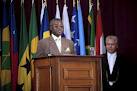
2013 BUDGET ADDRESS BY HON. ALEXANDER B. CHIKWANDA, MP
MINISTER OF FINANCE, DELIVERED TO THE NATIONAL ASSEMBLY ON
FRIDAY 12TH OCTOBER, 2012
1. Mr. Speaker, I beg to move that the House do now resolve into Committee of Supply on the Estimates of Revenue and Expenditure for the year 1st January 2013 to 31st December 2013 presented to the National Assembly in October 2012.
2. Sir, I am the bearer of a message from His Excellency the President recommending favourable consideration of the motion that I now lay on the Table.
3. Mr. Speaker, the Patriotic Front Government is dedicated to the veritable advancement of social justice for all. This requires a complete change of our mind-sets and priorities, both as individuals and as a nation. It also requires a structural transformation of our economy by developing a healthy and well educated labour force, developing and maintaining an efficient infrastructure and exploiting our abundant natural resources and entrepreneurial opportunities to deliver a vibrant and sustainable economy that raises the quality of life for all.
4. Mr. Speaker, with this vision in mind, my task today is to propose a budget for 2013 that will set Zambia on this trajectory to sustainable and inclusive growth, with the focus on expanding opportunities for all and ensuring the equitable distribution of the tangible benefits of development. The journey will certainly not be easy or uncontested with difficult challenges requiring tough choices. These challenges are not insurmountable if we work harder to anchor prosperity and build a solid foundation for posterity.
5. Sir, when we came into office just over a year ago, we promised to transform our country by adopting a more people-centred development agenda and, by so doing, deliver more money in people’s pockets. Let me state without reservation and ambiguity that we are determined to deliver on this commitment. In this regard, the theme for next year’s budget is “Delivering Inclusive Development and Social Justice”.
6. Sir, I wish to stress that this will not be achieved simply by promoting handouts. Our fundamental approach is to build a self-reliant people able to sustainably generate money for their own pockets. Mr. Speaker, this is the surest way of sustainably defeating poverty and delivering the inalienable rights of liberty and social justice for all our people.
7. Mr. Speaker, my address today is divided in four parts. In the first part, I discuss global and domestic economic developments in 2012 and the outlook for 2013. In Part 2, I provide this Government’s policy objectives for 2013. In Part 3, I present the 2013 Budget, and conclude my Address in Part 4.
PART I
OVERVIEW OF THE GLOBAL AND DOMESTIC ECONOMY
8. Mr. Speaker, global growth in 2012 has been uneven and weak. This is attributable to the turbulence in the Eurozone, lethargic growth in the United States, and a slowdown in the major emerging markets such as China, India and Brazil. Sir, sluggish growth in the world economy depressed prices for copper, our major export, while oil and food prices were generally higher.
9. Sir, growth in Sub-Saharan Africa has been relatively favourable, partly due to increased trade and investment flows between Africa and key emerging economies and the relative insulation of the region from external financial shocks.
10. Mr. Speaker, despite unfavourable global economic conditions, the domestic economy has been resilient in 2012 with Gross Domestic Product (GDP) growth estimated at just over 7 percent.
11. Sir, over the last nine months, overall budget performance has been satisfactory, with domestic revenues and direct budget support being 5.5 percent above target. Total domestically financed expenditure was 6 percent lower than programmed, due to low absorption capacity mainly in the road sector. The overall deficit is projected not to exceed the target of 4.3 percent of GDP set for 2012.
12. Sir, monetary policy implementation was generally appropriate. As at end September, 2012 inflation was 6.6 percent while money supply growth was 6.3, both of which were in line with the end year targets. Interest rates, however, remained high despite the Bank of Zambia lowering very significantly the statutory and core liquid asset ratios, and introducing the Policy Rate. Sir, these high interest rates continue to impose unsalutary effects on the economy.
13. Mr. Speaker, in 2012, Government made it mandatory, through a statutory instrument, for all domestic transactions to be effected in Kwacha, Zambia’s legal tender. I am glad to report that there has been wide-spread acceptance of this measure which has contributed to the stability of the Kwacha.
14. Mr. Speaker, another important policy decision in 2012 was the rebasing of the Kwacha. The rebased currency will simplify financial transactions and will become legal tender from 1st January, 2013. I will soon table before this House, the Redenomination of Currency Bill to give effect to this policy decision. I urge all stakeholders in this process to adequately prepare for the transition to use the rebased currency.
15. Sir, the overall condition and performance of the financial sector was satisfactory as at end-September 2012. There was an improvement in the banking sector’s aggregate capital adequacy and earnings performance, whilst asset quality and liquidity conditions remained stable. Non-bank financial institutions also continued to be stable and registered growth.
16. Mr. Speaker, Zambia is expected to record a merchandise trade surplus of US$960 million this year. Overall export earnings are projected to rise marginally due to significantly higher non-traditional export earnings, more than compensating for lower copper volumes and prices. Non-traditional exports are projected to rise by over 50 percent to US$2.5 billion in 2012 from US$1.6 billion in 2011, with higher exports of maize, electricity, cotton, fresh flowers, burley tobacco and gemstones contributing to this increase.
17. Mr. Speaker, gross international reserves rose to US $2.6 billion as at end-September 2012 from US $2.3 billion at end-December 2011, representing 3.5 months of import cover.
18. Mr. Speaker, I am pleased to report that we successfully issued an inaugural 10 year bond of US $750 million at the most favourable price ever secured in Sub-Saharan Africa for a first issue. Sir, this reflects the high confidence the international investor community has for Zambia as a safe and preferred place to invest. The House will be pleased to know that the bond order book climaxed at US$11.9 billion and only prudence and capacity considerations determined the US$750 million cap.
19. Sir, as at end-September 2012, our external debt stock, including the proceeds from the bond, stood at US $2.47 billion, from US $1.56 billion in 2011. The stock of domestic debt, including domestic arrears, increased by 8 per cent to K13.7 trillion as at end-August 2012, from K12.7 trillion at end-August 2011. I wish to assure the nation that both our external and domestic debt stocks remain within sustainable levels.
PART II
MACROECONOMIC OBJECTIVES, POLICIES AND STRATEGIES
FOR 2013 AND THE MEDIUM TERM
20. Mr. Speaker, the Government fully appreciates the myriad needs of our people. They require decent work that provides sufficient income to support and feed their families. They require a well staffed and adequately equipped health care and educational system, and training opportunities that will empower the youth with the skills needed for the 21st century. They need improved access to clean water, good sanitation, decent housing and food security in their communities. They also desire a more responsive government that allows for more decision making within their local communities
21. Sir, it is our responsibility, as a people-centred Government, to foster conditions that will promote accelerated delivery on these real and noble aspirations.
22. To achieve these aspirations, Government will ensure that the economy continues its strong performance, but does so by following a more inclusive path where the benefits of growth are more equitably shared. In this light, the macroeconomic objectives for 2013 are to:
a) achieve real GDP growth of above 7.0 percent;
b) attain end-year inflation of no more than 6.0 percent;
c) achieve domestic revenue of at least 20 percent of GDP;
d) limit the overall fiscal deficit to 4.3 percent of GDP, of which domestic borrowing will be 1.5 percent;
e) maintain gross international reserves of at least four months of import cover; and
f) create at least 200,000 decent jobs.
Strategy for Growth and Job Creation
23. Mr. Speaker, in direct response to high unemployment, low incomes and consequent high poverty levels among our people, it is the intention of this action-oriented Government, within its first term of office, to significantly transform Zambia’s economy, by focusing on sectors with high employment creation potential.
24. In this regard, Government has formulated a National Strategy for Industrialization and Job Creation, which prioritizes four major areas namely: agriculture; tourism; manufacturing and infrastructure development. I will now briefly highlight the medium term policies and strategies which Government will implement over the next five years.
Agriculture and Forestry
25. Mr. Speaker, agriculture is the life blood for the majority of our people and its development is not merely an aspiration, but an imperative. This Government will boost crop and livestock production, and strengthen agriculture’s forward and backward linkages to other sectors of the domestic economy, so as to exploit its full development potential.
26. To boost and diversify crop production, Government will expand the scope of the Farmer Input Support Programme to include and cover other crops such as soya, cotton, sunflower, and rice. It will also mainstream the electronic voucher system from 2013 to strengthen the private sector’s role in supplying agricultural inputs. Sir, we will scale up investment in extension services, irrigation, training institutions and research and development in order to improve crop yields. Government will further invest in roads, power and storage facilities in order to improve small-holder farmers’ access to markets.
27. Mr. Speaker, backward linkages will be promoted by increasing local production of key agriculture inputs such as fertilizers, seeds and pesticides. The Government will promote forward linkages by putting in place appropriate policies and incentives to encourage local value addition to crops and livestock products.
28. To boost the livestock sub-sector, Government will enhance livestock restocking; scale up animal disease research and development; and implement disease free zones.
29. Mr. Speaker, to create fiscal space to finance these core agriculture sector programmes, Government will restrict the operations of the Food Reserve Agency to managing the nation’s strategic food reserve. Government will also ensure policy consistency with respect to crop marketing and exports that enables us to take advantage of regional export opportunities.
30. Sir, to re-energize the forestry sector Government will review and improve forest management systems; introduce forestry extension services; provide tree seedlings and enhance private sector participation in the sector.
31. Mr. Speaker, the agriculture and forestry policies and strategies I have outlined above are expected to provide the bulk of new employment opportunities, with about 550,000 new jobs targeted over the next five years.
Tourism
32. Mr. Speaker, His Excellency the President attaches great importance to tourism and in order to enhance its profile, he created the new Ministry of Tourism and Arts. Further, to raise the nation’s visibility as a preferred tourism destination, we successfully bid, with Zimbabwe, to host the 2013 United Nations World Tourism Organisation Conference.
33. Sir, tourism is beset by a number of constraints which include uncompetitive tourism products characterized by high cost of rooms and consumables and poor access to tourism sites. This has led Zambia to have a low number of tourists per annum relative to our regional peers.
34. Mr. Speaker, our goal is to promote product diversification, invest more in tourism infrastructure, streamline licensing procedures and also enhance capacity in the hospitality industry. This will increase the number of international and domestic tourists and raise both the average length of stay and the average expenditure per tourist per day.
35. Sir, tourism is pivotal to the PF Government’s platform to create gainful employment for Zambians. In this regard, the Government aims to facilitate the creation of approximately 300,000 jobs in the tourism sector over the next five years.
Manufacturing
36. Mr. Speaker, the constraints faced by the manufacturing sector include weak forward and backward linkages; underutilization of available capacity; the narrow range of products; the high cost of production; limited access to long term financing; low skill levels and generally outdated technology.
37. Sir, the strategic focus in manufacturing will be to promote products that can be competitively exported or successfully substituted for manufactured imports. We intend to promote and facilitate value addition to locally available raw materials by putting in place appropriate industrial infrastructure for small and medium scale enterprises, particularly in rural areas as well as promoting foreign direct investment in the Multi Facility Economic Zones. We will also tailor the investment incentives to entrepreneurs that invest in value addition ventures and promote employment. I will announce later this afternoon, specific measures in relation to fiscal incentives for the manufacturing sector to encourage local value addition and employment creation.
38. Further, medium to long term financing will be provided for micro, small and medium entrepreneurs through the banking sector.
39. Sir, we envisage that through this concerted and coordinated intervention in the sector, approximately 90,000 jobs will be generated over the next five years.
Infrastructure Development
40. Mr. Speaker, our ability to favourably compete in the global economy is severely hampered by inadequate economic infrastructure particularly roads, rail and power generation capacity. Consequently the cost of doing business is high and limits the scope for our productive sectors to grow and create employment. To address this, the PF Government is committed to investing heavily in Zambia’s economic infrastructure, hence our successful entry in the international capital market to raise development finance for this purpose.
Transport Infrastructure
41. Mr. Speaker, in September of this year, His Excellency the President launched the Link Zambia 8000 Project. The project will extend the classified and paved road networks in the country. The aim is to link all provincial capitals and open up the country to investment, particularly in rural areas to enhance accessibility to markets.
42. Sir, the Government has planned to pave about 2,000 kilometres of township roads using labour-intensive paving block and cobblestone technology. This environmentally friendly and labour intensive technology will be piloted in 15 sites across the ten provinces, creating over 20,000 jobs.
43. Mr. Speaker, rail is one of the most efficient forms of transporting bulk and time sensitive commodities such as copper. Over the last decade, lack of re-capitalization, and general neglect of the rail network has resulted in dilapidated rail stock and unreliable service. Consequently, low volumes of merchandise are being transported by rail with traffic being diverted to an already over-burdened road network, which raises the cost of road maintenance and rehabilitation. It is in this context that Government made a decision to terminate the Concession Agreement for the Railway Systems of Zambia.
44. Sir, in order to revamp the rail transport system, Government intends to make significant resources injections in this sector, with the aim of leveraging further support from the private sector.
Energy Infrastructure
45. Mr. Speaker, reliable supplies of energy such as electricity and petroleum products are key in driving the wheels of commerce and industry. Honourable Members of this House are aware of the challenges in this sector which include frequent disruptions of power supply.
46. Sir, the Government will partner with the private sector in order to increase installed generation capacity, improve the transmission and distribution infrastructure, and expand rural access to electricity. To this end, the Government is working with strategic partners to develop the Itezhi-Tezhi and Kafue Gorge lower power stations and complete the extension of the Kariba North Bank Power Station, amongst other projects.
47. Mr. Speaker, with regard to the petroleum sub-sector, Government will continue constructing fuel depots across the country. The Government will also continue to promote private sector investment in the use of renewable energy and alternative sources of energy such as solar, bio-mass, geo-thermal and wind.
48. Sir, our aim is to generate at least 90,000 direct jobs in the energy sector.
49. Mr. Speaker, the revenue and expenditure measures that I will outline later in my address, will clearly demonstrate actions the PF Government is taking to achieve the objectives for the priority sectors I have outlined.
Social Sector Policies
50. Mr. Speaker, the ultimate goal of the Government’s economic growth and development strategy is to improve the quality of life of all Zambians. We attach the highest priority to education, health, housing and water and sanitation, as the most strategic areas for eradication of poverty and entrenchment of development. Sir, by focusing on education, health, housing and water and sanitation, we are taking a preventive, rather than a curative approach to the many socio-economic ills that besiege our society.
51. Sir, in education, the focus will be on expanding access to high school and tertiary education and improving quality at all levels. Further, the Government will scale up youth development programmes with the focus on skills development through the construction and rehabilitation of TEVET institutions.
52. Sir, efforts in the health sector will be on improving service delivery, particularly in rural areas. In addition, Government will scale up the provision of essential drugs and medical equipment and other supplies. We will embark on an ambitious programme of upgrading all hospitals starting with the three referral hospitals – University Teaching Hospital and the Central Hospitals in Ndola and Kitwe.
53. In the area of water and sanitation, Mr. Speaker, the strategic focus will be on efficient provision of reliable and safe water and sanitation services in both rural and urban areas. This will be done through the rehabilitation and construction of boreholes in rural areas. In urban areas, development and rehabilitation of water supply and sanitation infrastructure will be up-scaled. The Government will also strengthen the capacity of water utility companies and other institutions in water and solid waste management.
54. Over the medium term, Government will facilitate the construction of low cost housing in order to narrow the current housing deficit. In addition, Government will construct institutional houses particularly in the education and health sectors.
Monetary and Financial Policies
55. Mr. Speaker, our aim in 2013 is to maintain low inflation of not more than 6.0 percent. In this regard, the Bank of Zambia will regularly review the performance of the Policy Rate and continue to use market-based instruments. In the foreign exchange market, the Government will maintain a flexible exchange rate regime and the Bank of Zambia will only intervene to smoothen short term volatility and continue to build reserves.
56. Mr. Speaker, in January 2013, the Bank of Zambia will effect the new minimum nominal capital requirement from the current K12 billion to K104 billion for locally owned banks and to K520 billion for foreign owned banks. This will promote stability of the financial sector and enhance commercial banks’ capacity for lending to the private sector.
57. Sir, the level of financial sector intermediation is still low, with only 37.0 percent of the bankable population having access to banking services. The lending-savings rate spread remains wide and our private sector lending to GDP ratio is low relative to regional averages. In view of this, I will bring to this august House a Bill aimed at strengthening corporate governance in the sector, and enhancing both competition and consumer protection.
Debt and Aid Policy
58. Mr. Speaker, with Zambia becoming a lower middle income country, access to grants and concessional loans will decline. While we will continue to engage our Cooperating Partners in sourcing concessional loans and grants, Government will increasingly need to resort to non-concessional loans to supplement domestic resources to finance development.
59. Sir, we remain mindful of our inescapable duty to never again burden future generations with unsustainable debts. In this regard, we will institutionalise a rigorous appraisal system for screening investment projects in order to ensure that borrowed funds are only applied to infrastructure projects that directly and demonstrably contribute to the nation’s economic growth. We will also promote transparency by conducting regular debt sustainability analyses.
Utilisation of the Eurobond Proceeds
60. Sir, in September 2012, Zambia made her inaugural entry on the international capital market and raised US $750 million, at a price that is one of the lowest ever for a debut issue for a Sub-Sahara African country. I assure this august House that the proceeds of this bond will not be utilized on consumption but on growth promoting infrastructure projects. In this regard, the allocations for the bond proceeds are as follows:
PROJECT ALLOCATION
1 Energy (Generation and Transmission) US $255million
2 Transport (Road and Rail) US $430 million
3 Human Capital and Access to Finance
Of which
Rehabilitation of Central Hospitals
Access to finance SMEs (DBZ) US $49 million
US $29 million
US $20 million
4 Fees and Transaction Costs US$1.4 million
5 Discount Premium US$14.6 million
Total US$750 million
Mining Sector Regulation
61. Mr. Speaker, it must be noted and acknowledged that apart from generating employment both directly and indirectly, and tax revenues, the mining sector generates about three-quarters of Zambia’s export earnings. Sir, the current problems in the management of our mineral resources include the lack of systems to monitor and account for what is produced and exported. This lack of oversight adversely affects our domestic resource mobilization efforts and development planning.
62. It is an immediate economic imperative for Zambia to put in place systems and institutions of governance to reverse this trend. Mr. Speaker, in 2013 Government will decisively address this matter through adequately resourcing and equipping the Ministry of Mines, Energy and Water Development to enable it assess the nature, quality and quantity of minerals being mined and exported.
63. To further augment these efforts, I will present to this House a Bill to strengthen penal sanctions for false reporting of mineral production and export information. This entails that all mineral exports and proceeds will be strictly monitored through an integrated framework.
Tax Policy Reforms
64. Mr. Speaker, major tax reforms were undertaken in 1992 which resulted in the creation of the Zambia Revenue Authority and the introduction of a broad-based consumption tax, Value Added Tax, among others. Over the last two decades we have not effectively built on these reforms. This has partly resulted in a declining tax to GDP ratio due to a proliferation of inefficient tax incentives and an increasingly non- performing VAT system.
65. Sir, in 2013 the Government will undertake a holistic tax reform, focusing on the following:
a) diagnostic review of the entire tax system;
b) simplification of the tax system for small and medium enterprises;
c) review of the tax incentives to promote equity and buoyancy; and
d) continue modernizing tax administration.
Public Financial Management Policies
66. Mr. Speaker, as a responsible Government, we are committed to ensuring the optimal, transparent and accountable use of the limited public resources at our disposal. With the expiry of the Public Expenditure and Financial Accountability (PEMFA) reform program in December 2012, Government is currently designing a new framework.
67. One critical area in the new framework is public procurement reforms. From January 2013, the Zambia Public Procurement Authority will no longer undertake procurement on behalf of procuring entities. Its role will now be that of oversight and regulating public procurement.
68. Mr. Speaker, the use of direct bidding or single sourcing will, however, require approval by the Zambia Public Procurement Authority until full decentralization is complete. All public institutions are directed to abide by the procurement laws and follow laid down procedures.
Decentralization Policy
69. Mr. Speaker, the devolution of power to democratically accountable councils remains a central goal of this administration, which is committed to the full participation of all Zambians in the design and implementation of their governance and development programmes.
70. To demonstrate this commitment, Government will fiscally empower councils from 2013 by initiating revenue sharing arrangements, and beginning to assist them to dismantle their debts and their outstanding contractual and statutory obligations. I will give more details of these arrangements later. Further, His Excellency the President has created new districts, and will create more, to form additional hubs for bringing Government and development closer to the people.
PART III
THE 2013 BUDGET
71. Mr. Speaker, the budget for 2013 is formulated against the backdrop of significant challenges in both the global and domestic economies. Apart from ensuring resilience of the economy against external shocks, the major challenge is to address the huge backlog of development arrears and the structural deformities and imbalances in our national budget.
72. Sir, it is as unacceptable as it is unsustainable that in much of the post-independence era recurrent expenditure has eclipsed the development budget. Steps have been taken in the recent past to remedy the situation and a major aim of the 2013 Budget is to further reorient the budget towards increasingly enhanced capital expenditure in a wider scope of sectors.
73. Mr. Speaker, these intractable structural imbalances in the budget cannot be remedied at the stroke of the pen. There is, however, a compelling need for us to embark on bold and relentless steps to remove the various hindrances to accelerated and inclusive growth. The Budget for 2013 that I now propose to this august House, will be the beginning of these bold steps that give practical effect to our efforts to achieve fully inclusive growth.
74. Mr. Speaker, the allocation of resources in the 2013 Budget has been informed by the policy priorities and objectives of this administration. The major areas of health, education and skills training, agriculture and local government have been prioritized alongside sectors with high employment generation potential, that is, tourism, infrastructure development and manufacturing.
75. Sir, in 2013, Government proposes to spend K32.2 trillion, which is 26.6 percent of GDP. A total of K24.7 trillion or 76.8 percent of this expenditure will be financed by raising domestic revenues, a further K1.5 trillion or 4.6 percent will be financed from grants from our Cooperating Partners, while the balance of K5.9 trillion or 18.4 percent will be raised by external and domestic borrowing
2013 EXPENDITURE ALLOCATIONS
76. Sir, in line with the sector policies outlined in Part II, I now discuss the supporting expenditure allocations by functions of the Government.
2013 EXPENDITURE BY FUNCTIONS OF GOVERNMENT
Functions Allocations (K' Billion) % OF BUDGET
General Public Services 8,441.1 26.2%
Executive 1,020.4
o/w Grants to Local Authorities 498.6
Constituency Development Fund 150.0
Legislation 643.5
General Government Services 6,064.7
o/w Domestic Debt Interest 1,521.3
External Debt 1,026.4
Compensation and Awards 200.0
Resource Mobilisation (ZRA) 405.7
Centralised Administrative Services 492.6
o/w Recapitalisation of Government Printers 50.0
Infrastructure in New Provinces/Districts 204.0
Defence 2,035.6 6.3%
Public Order and Safety 1,347.0 4.2%
Economic Affairs 8,897.0 27.6%
General Economic, Commercial and Labour Affairs 926.8
o/w Empowerment Funds 103.9
Rehabilitation of Nitrogen Chemicals of Zambia 255.0
MFEZ Development 57.3
Agriculture, Forestry and Fishing 1,865.4
o/w Farmer Input Support Programme 500.0
Food Reserve Agency 300.0
Fuel and Energy 1,445.0
o/w ZESCO Power Generation, Transmission & Distribution 984.3
Mining 81.2
Transport 4,392.1
o/w Road infrastructure 3,434.4
Railway Infrastructure 642.6
Communication 122.7
Tourism 63.8
Environmental Protection 74.2 0.2%
Housing and Community Amenities 1,007.8 3.1%
o/w Water Supply and Sanitation 783.8 2.4%
Health 3,638.1 11.3%
o/w Drugs and Medical Supplies 594.1
Infrastructure Development 390.1
Recreation, Culture and Religion 252.3 0.8%
Education 5,626.8 17.5%
o/w Infrastructure Development 663.3
Social Protection 892.2 2.8%
o/w Public Service Pension Fund 616.9
Social Welfare (including Cash Transfers) 83.1
Grand Total 32,212.2 100.0%
Economic Affairs
77. Mr. Speaker, in line with Government’s development agenda, substantial resources have been allocated for economic affairs programmes. The outlay has been increased from the 2012 allocation of K8.1 trillion to K8.9 trillion, with the bulk of the allocation going to agriculture, energy and transport.
78. Sir, as I have already stated, the agriculture sector is expected to contribute over half of the new employment opportunities over the next five years. I have therefore allocated K1.9 trillion to this sector. Of this amount K1.1 trillion has been provided for core agriculture programmes including those aimed at promoting the sector’s diversification and cater for livestock, fisheries, crops and irrigation development. I have also allocated K500.0 billion to the reformed Farmer Input Support Programme, which by mainstreaming the e-voucher system, will also promote crop diversification. I have also set aside funds to recruit 900 additional extension officers.
79. In line with the policy for the Food Reserve Agency to focus on maintaining the national strategic food reserve, I have allocated K300.0 billion for the 2012/2013 marketing season.
80. Mr. Speaker, this Government promised to improve the quality of our economic infrastructure including our road network. As a demonstration of our commitment to develop an efficient and modern road network, I propose to spend K3.4 trillion in 2013. This will facilitate work on at least 1,500 km of our roads. While on-going projects will be continued, the focus for new roads will be on roads identified in the Link Zambia 8000 Programme.
81. Mr. Speaker, in order to divert heavy traffic from road to rail, and thereby reduce future road maintenance costs and lower the cost of doing business, the Government will work on improving the efficiency of the railway system. Government has mobilized K642.6 billion to recapitalize the rail network.
82. Sir, I alluded to the challenges in the energy sector and the grave risks that power shortages pose to our economic development. I have thus allocated K1.4 trillion to this sector out of which K984.3 billion has been provided for electricity generation, transmission and distribution infrastructure. A total of K336.3 billion has been set aside for the rural electrification programme.
83. With regard to the tourism sector, I have provided K32.3 billion for tourism marketing and promotion, with particular focus on the UNWTO conference that will be held in Livingstone in August 2013. In support of the hosting of the UNWTO, I will later propose tax concessions in my revenue measures.
Education
84. Mr. Speaker, I propose that a total of K5.6 trillion be spent in 2013 for the purpose of providing quality education and skills training to our children and the youth. This represents a 15.8 percent increase over the 2012 allocation.
85. Sir, it is this Government’s intention to revamp secondary and tertiary education so as to significantly improve the progression rate of pupils that are being produced from our primary schools. I have, therefore, allocated K393.3 billion in 2013 for the development of secondary school infrastructure across the country. A further K475.1 billion has been earmarked for operations and expansion of infrastructure in universities, colleges and trades training institutes.
86. Sir, I have also allocated sufficient resources to facilitate the net recruitment of not fewer than 5,000 teachers.
87. In addition to the funds allocated to the trades training institutes for skills training, I have allocated an additional K50 billion to empower unemployed and vulnerable youth with vocational skills.
Health
88. Mr. Speaker, with regard to health, I have proposed an allocation of K3.6 trillion or 11.3 percent of the 2013 Budget. This represents an increase of K1.0 trillion or 40.7 percent over the 2012 allocation.
89. Sir, a notable allocation in the sector is the K594.1 billion for drugs and medical supplies an increase of 112.3 percent over the 2012 allocation. In addition, K110.8 billion has been provided for the procurement of varied medical equipment.
90. Mr. Speaker, in addition to the K186.1 billion that has been set aside for infrastructure development in the health sector, a further K204 billion has been provided for the University Teaching Hospital and the Central Hospitals in Kitwe and Ndola.
91. Sir, I have also allocated sufficient resources to facilitate the net recruitment of not fewer than 2,000 front line medical personnel.
General Public Services
92. Mr. Speaker, for General Public Services, a provision of K8.4 trillion or 26.2 percent of the budget has been made. Out of this amount, I have allocated K2.5 trillion to service domestic and external debt.
93. Sir, in order to fiscally empower local government ahead of sector devolution, grants to councils have been restructured and increased. Further, revenue sharing arrangements have been introduced. In this regard, the allocation for council grants has increased to K498.6 billion in 2013 from K257.1 billion in 2012 which is an increment of 93.9 percent. An increased proportion of the grants to councils has been allocated to the restructuring grant to assist councils dismantle their debts and outstanding statutory and contractual obligations.
94. A further K204.0 billion has been set aside to commence the construction of infrastructure for other Government departments in the newly created districts and provincial capitals.
95. Sir, other provisions include K200.0 billion for compensation and awards for payment of litigation cases ruled against the Government. A further K20.0 billion has been provided for the constitution making process in 2013.
Public Order and Safety
96. Mr. Speaker, the Government proposes to spend K1.3 trillion or 4.2 percent of the budget on Public Order and Safety. To support the fight against corruption I have increased the allocation to the Anti Corruption and Drug Enforcement Commissions by 11.2 percent to over K100 billion.
97. The Government will also continue to strengthen the Zambia Police Service by recruiting and modernising their operations. In addition to the K30 billion allocated for the modernisation of the Service, I have also made sufficient provisions for the net recruitment of 800 police officers.
98. Further, K76.3 billion has been allocated for infrastructure development for the Judiciary, Ministry of Home Affairs and the Drug Enforcement Commission. These amounts will primarily go towards the construction of court buildings, prisons and border infrastructure.
Housing and Community Amenities
99. Mr. Speaker, in order to tangibly improve the quality of life of our people, I have allocated a total of K1 trillion to invest in housing and community amenities. Within this allocation, K783.8 billion will be used to enhance access to safe water and good sanitation for our people.
100. Sir, this includes the drilling of over 2,500 boreholes countrywide under the National Rural Water Supply and Sanitation Programme. The balance of the funds will be used to invest in other housing and community amenities including the construction of low cost housing for the less privileged.
Social Protection
101. Mr. Speaker, a total of K892.2 billion has been allocated for social protection programmes. Of this amount, K616.9 billion has been provided for the Public Service Pension Fund. In addition, K83.1 billion has been provided for various social safety nets which include the Public Welfare Assistance Scheme and social cash transfers.
REVENUE ESTIMATES AND FINANCING
102. Mr. Speaker, to support the expenditure I have outlined above, Government expects to raise a total of K32.2 trillion in revenues and financing. Domestic revenues will account for 76.8 percent, support from Cooperating Partners will account for 4.7 percent and domestic and foreign financing will account for 18.4 percent.
103. Sir, the break down of the revenue estimates and financing is tabulated as follows:
TOTAL RESOURCE ENVELOPE FOR THE 2013 BUDGET
(K’ billion) % of GDP
Total Tax Revenues 23,536 19.4%
Income Tax 12,809.44 10.6%
Company Income Tax 4,788.59
PAYE 5,018.66
Withholding & other 1,080.17
Mineral Royalty 1,922.03
Value Added Tax 6,016.42 5.0%
Domestic VAT 500.64
Import VAT 5,515.78
Customs and Excise 4,710.03 3.9%
Customs duty 2,113.85
Excise duty 2,596.18
o/w Fuel Levy 659.16
Non-Tax Revenues 1,210.00 1.0%
Fees & Fines 788.71
Exceptional 415.29
Dividends & On-lending 6.00
Domestic Borrowing 1,863.44 1.5%
Total Domestic Revenue and Financing 26,609.32 21.9%
Total Foreign Grants and Financing 5,602.84 4.6%
Grants 1,525.54
General Budget Support 599.07
Sector Budget Support 0.00
Project Grants 926.47
Foreign Financing 4,077.30
Programme Loans 2,840.19
Project Loans 1,237.11
Total Revenue And Financing 32,212.16 26.6%
104. Mr. Speaker, the 2013 revenue measures support the policies and strategies I have outlined, so as to meet our macroeconomic objectives for 2013 and the medium term. These measures aim to foster local value addition, reduce the cost of doing business, encourage savings and investment and streamline the tax incentives and make the tax system more equitable, at the same time generating adequate resources for development.
105. Sir, let me now outline the details of the revenue measures I am proposing for 2013.
DIRECT TAXES
106. Mr. Speaker, in order to maintain the value of the tax-free threshold of Pay-As-You-Earn, I propose to increase the current exempt amount per month by 10 percent, from K2 million to K2.2 million. This 10 percent adjustment is at a rate higher than the expected inflation target of 6 per cent for 2013. Accordingly all tax bands will be adjusted upwards by K200,000.
107. Current System
Current Income Bands Rate
First 0 – 2,000,000 per month 0%
Next K2,000,001 – K2,800,000 per month 25%
Next K2,800,001 – K5,700,000 per month 30%
Balance Above K5,700,000 per month 35%
Proposed System
Current Income Bands Rate
First 0 – 2,200,000 per month 0%
Next K2,200,001 – K3,000,000 per month 25%
Next K3,000,001 – K5,900,000 per month 30%
Balance Above K5,900,000 per month 35%
108. Mr. Speaker, to further enhance the take-home pay of employees, I propose to increase by 64.5 percent, the tax deduction for pension contributions, to K255,000 per month.
109. Sir, as a result of these two measures, an additional K257.3 billion will be put in the pockets of our industrious workers.
110. Sir, as a clear demonstration of our commitment to restore a culture of savings and investment, I propose to remove tax on interest earned by individuals from savings and deposit accounts. In the same spirit, I further propose to abolish the medical levy which is currently charged on interest earned on savings and deposit accounts, treasury bills, government bonds and other similar financial instruments.
111. The total revenue impact of these two measures is a loss of K40.6 billion.
112. Mr. Speaker, in order to compensate for the revenue loss arising from the above measures, I propose to introduce property transfer tax at the rate of 10 percent on the sale or transfer of a mining right. I also propose to reduce to 25 percent from 100 percent the capital expenditure deduction rate, applicable in the mining sector, and further provide that capital expenditure will only be claimed for deduction from the year the capital asset is brought into use in the business.
113. Sir, I also propose to apply transfer pricing rules to interest payments made by mining companies. This is meant to ensure that interest payments are not only subject to thin capitalisation rules but also transfer pricing rules, where the rate on interest between related or associated parties is not at arm’s length.
114. In addition, I propose to increase the withholding tax rate on payments to non-residents for management or consultancy fees and royalties to 20 percent from the current 15 percent.
115. Sir these measures will generate a total of K265.7 billion.
116. Mr. Speaker, to promote efficiency in tax administration and reduce the cost of tax compliance for micro, small and medium enterprises, I propose to increase the threshold under which businesses are required to pay taxes on a turnover basis to K800 million from the current K200 million annual turnover.
117. As a result of improved efficiency in tax administration, in this regard, Government will save a total of K2.6 billion.
VALUE ADDED TAX
118. Mr. Speaker, I propose to zero-rate bread and wheat for Value Added Tax purposes. This is in order to reduce the cost of living for families as well as to promote domestic production of wheat and wheat products and enhance competitiveness.
119. Sir, this measure will result in a loss of more than K100 billion.
120. Sir, in tandem with the measure to promote efficiency in tax administration and reduce the cost of tax compliance for micro, small and medium enterprises, I propose to increase the Value Added Tax registration threshold to K800 million per annum from the current K200 million. Sir, businesses below this new threshold that have the capacity to meet the necessary accounting requirements for VAT registered suppliers, have an option to apply for voluntary registration.
121. As a result of improved efficiency in tax administration from this measure, Government will save a total of K164.6 billion.
122. Mr. Speaker, polymer granules, plastic and liquid polymers, jute bags and synthetic woven bags are currently exempt from VAT. This makes the production of synthetic bags and other plastic articles uncompetitive, as producers of these items are not able to claim input VAT suffered in the production process. Sir, I propose to standard rate plastic polymer granules and liquid polymers, synthetic woven bags and block bottom woven bags.
123. Sir, the effect of this measure will be a gain of K59.6 billion
124. Sir, I have proposed to reduce the validity period within which a tax invoice can be used to make a VAT claim from the current twelve months to six months, in order to streamline tax administration and reduce the risk of tax fraud.
CUSTOMS AND EXCISE
125. Mr. Speaker, regarding measures on customs and excise policy, I seek to address matters relating to:
a) reducing the cost of doing business;
b) supporting local value addition initiatives and promoting the manufacturing sector;
c) promoting inclusive growth and development through employment creation; and
d) fostering growth of the tourism sector.
126. Mr. Speaker, despite the stable and rapidly growing economy, the cost of doing business in Zambia remains prohibitively high. This holds-back the entrepreneurial potential of our people and is counter-productive to investment, employment creation and poverty reduction.
127. Mr. Speaker, in order to reduce the cost of doing business and make capital equipment more affordable, I propose to remove customs duty on a wide range of mechanical and electrical machines and machine tools. These include, among others, engines of all types, cranes of all types, conveyor belts, machines for cutting, grinding, polishing, drilling and welding, vacuum and liquid pumps and sprayers of all types.
128. Sir, to promote information and communication technology, I propose to remove customs duty on automatic data processing machines; magnetic or optical readers, and machines for transcribing and processing data.
129. Mr. Speaker, in view of the challenges we face in the supply of electrical power, I also propose to remove customs duty on wind powered engines, gas stoves and electrical capacitors.
130. Sir, in order to support private sector participation in the provision of cost effective quality health and veterinary care, I also propose to remove duty on the following equipment:
a) cameras specially designed for medical or surgical examination of internal organs;
b) electro-cardiographs;
c) ultrasonic scanning and magnetic resonance imaging apparatus;
d) dental drill engines, dentures, bone reconstruction cement; and
e) instruments and appliances used in dental science.
131. Mr. Speaker, I have noted with satisfaction the number of companies that are involved in the manufacture of various aerated non-alcoholic beverages and packed drinking water. However, the current 10 percent excise duty on these drinks has had the effect of constraining the industry’s growth potential. I therefore propose to remove the excise duty on carbonated drinks and packed water.
132. With this measure, I expect that these drinks will become more affordable for Zambians. This will spur the growth in the beverage sector, contribute to the creation of opportunities for forward and backward linkages in the economy, as well as promote employment.
133. Mr. Speaker, in order to promote public and private sector investment in rail transport, reduce the cost of doing business for industries transporting bulky products, and reduce future road maintenance costs, I propose to remove customs duty on locomotives and carriages, and rail traffic control equipment.
134. Sir, to encourage rural based tourism and the fishing industry, and make water transport safer and more accessible, I propose to remove duty on refrigerated fishing vessels, canoes, cruise and ferry boats, dredgers, pontoons and other water vessels.
135. Mr. Speaker, the use of motor cycles is critical to improving access, especially over the rugged terrain in rural areas. Similarly, the availability of ambulances is vital not only with regard to transporting rural patients to referral health facilities, but also enhancing access to mobile health care country wide. Therefore, I propose to remove customs duty on both motor cycles and ambulances.
136. Sir, in order to support the differently-abled, I propose to remove duty on devices and imported modified motor vehicles as provided for in the Persons with Disabilities Act. No. 6 of 2012.
137. Mr. Speaker, our PF manifesto alludes to the importance of sport in shaping the fabric of life through recreation and healthy living. In order to encourage private sector participation in sports development, I propose to suspend duty on equipment used for physical exercise, gymnastics, athletics and other sports. Sir, I am however, confident that with time the domestic economy will develop sufficient capacity to manufacture most of these sporting equipment. Therefore the removal of duty will only be for a period of 3 years.
138. Sir, as a result of the above measures the Treasury has put back K186.2 billion into the Zambian economy.
RATIONALISATION OF TAX INCENTIVES FOR EMPLOYMENT CREATION AND VALUE ADDITION
139. Mr. Speaker, in support of our strategy to promote local value addition, I propose to increase customs duty on flat rolled products of iron or non-alloy steel used in the manufacture of roofing sheets. I further propose to increase duty on similar products excluding those coated with tin and lead. Similarly I intend to increase customs duty on yarn synthetic stable fibre not put up for retail sale.
140. Sir, the estimated gain from these measures is K76.2 billion.
141. Mr. Speaker, our current tax incentive regime remains one of the most generous in the region but this generosity has not translated into creation of decent employment opportunities for our people. As part of our resolve to review the tax incentives regime, I propose the following changes.
142. Sir, this budget will make it a requirement for tax incentives to be granted only when the investor meets their obligations related to employment creation for Zambians. This will be done by amending the Zambia Development Agency Act, the Income Tax Act and the Customs and Excise Act, to make the realisation of employment pledges by investors an essential trigger for them to access the incentives.
143. Sir, I also propose to revise upwards to 20 per cent from zero the Withholding Tax payable on any management fees, consultancy fees or interest payment to a non-resident contractor by a person developing a Multi-Facility Economic Zone or an Industrial Park as well as any person operating in a Multi-Facility Economic Zone or an Industrial Park.
144. On a similar note, I propose to change the effective date on which tax exemptions on business profits and dividends for businesses developing or operating in priority sectors, Multi-Facility Economic Zone and Industrial Parks take effect. Sir, the effective date of the exemptions will now be the date of commencement of business operations instead of the date of first declaration of profits or dividends, currently in place.
145. Mr. Speaker, to further rationalise granting of incentives, I propose to standard rate goods and services when supplied to or imported by businesses operating in Multi-Facility Economic Zones or Industrial Parks.
146. Mr. Speaker in order to further promote local value addition I propose that, where exemption from customs duty is granted as an incentive, it will only apply on goods that are not locally produced.
SUPPORT TO TOURISM AND ARTS
147. Mr Speaker, in line with the interventions I have stated, aimed at enhancing the competiveness of the tourism sector, and in order to leverage the maximum benefit from hosting the 2013 United Nations World Tourism Organisation Conference, I propose to suspend duty on the following goods:
a) New motor vehicles for tourism enterprises that offer transport services; and
b) New articles and equipment needed to furnish or refurbish accommodation and catering facilities for businesses licensed as tourism enterprises.
148. Sir, as a clear demonstration of our commitment to leverage these benefits, the suspension will come into effect from midnight tonight and will last up to 31st December 2013.
149. Mr. Speaker, currently some tourist activities for which tour guide services are provided, are zero rated for VAT purposes, while the service of tour guiding is standard rated. I propose to remove the inconsistency by zero rating tour guide services. I further propose to extend the zero-rating of adventure tourism applicable to foreign tourists to local tourists. Sir, these measures are intended to foster development of the tourism industry and encourage local tourism.
150. In order to strengthen our local heritage and culture, and support the growth and marketing of the domestic music and visual arts industry, I propose to remove customs duty on charcoal drawing sticks, palette knives, mixers, microphones and magnetic tape.
HOUSE KEEPING MEASURES
151. Mr. Speaker I propose to amend the Income Tax Act, the Value Added Tax Act and the Customs and Excise Tax Act to update, strengthen and remove ambiguities in certain Sections of the tax legislation.
NON TAX REVENUE
152. Mr. Speaker, since assuming office I have noted that some of the fees for services provided by Government departments are far too low and have not been revised for a long time. I propose to effect changes to the relevant pieces of legislation in order to bring such fees to cost reflective levels and to raise revenue for development projects.
153. Sir, I have noted with grave concern the profligacy with which some revenue collecting statutory bodies have utilized and accounted for public resources. Consequently, I propose to make it mandatory for revenue collecting statutory bodies to deposit all their collections from various fees and fines into the Treasury.
154. I expect to raise K 267.7 billion from these non-tax measures.
155. Mr. Speaker, these measures, excluding the one I have indicated on tourism, will take effect on 1st January, 2013.
PART IV
CONCLUSION
156. Mr. Speaker, the budget proposed for 2013 launches Zambia on a new path of inclusive development and societal transformation, where the benefits of growth are not merely recorded in dry statistics but felt tangibly by all Zambians in all areas that directly affect their material well being and those of their families. This is the promise that the PF Government made to the Zambian people last year and it is a promise that we are unswervingly committed to fully deliver upon.
157. Mr. Speaker, President Sata has got us to a good start on the governance plane by emphatically making corruption absolutely tolerance zero-rated. He has established a track record of diligence and dutifulness and being a manager with meticulous attention to detail. Unlike what we saw in the not too distant past, due primacy has been assigned to national interest and not personal glory and greed.
158. Mr. Speaker, our approval rating in the international place particularly in the financial community has shot up. Last month our first sovereign bond issuance at an order book of US$11.9 billion, was 24 times oversubscribed. Let us join the President in getting Zambia moving at full throttle. We need meaningful unity in diversity for unity must never be synonymous with uniformity.
159. We all in this House and outside there in the country need to embrace accommodation and tolerance for the opposite is not an option but a recipe for doom. All of us in this House and those outside who stake a claim to leadership must establish moral/ethical benchmarks that will be our guide, our roadmap and preferably our Modus Vivendi – our way of life.
160. Mr. Speaker, I beg to move.